
- all_points_moving
What Items Do Professional Movers Refuse to Move?
Key Takeaways
|
Professional movers do not transport every item a customer packs. Certain belongings may be refused because they create safety risks, violate transportation regulations, require special handling, or expose the moving company to unnecessary liability. This guide explains which items professional movers commonly refuse to move and why they fall outside standard moving services.
1. Hazardous, Flammable, and Explosive Materials
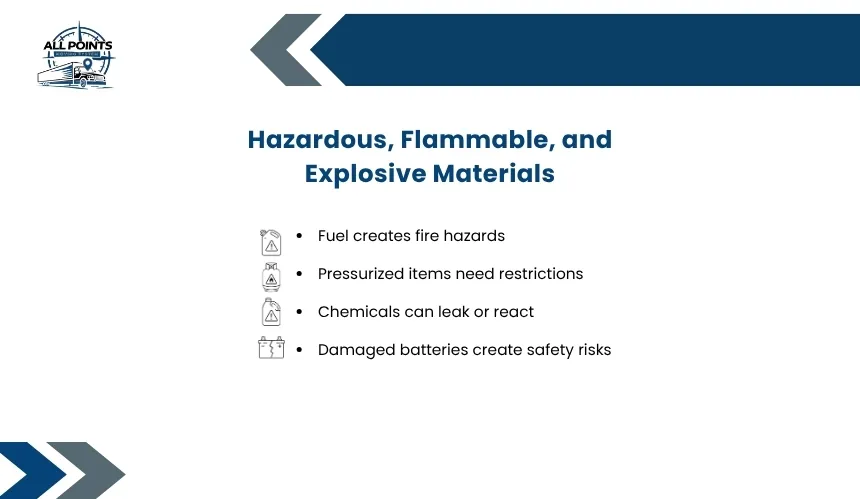
Professional movers typically refuse hazardous materials because they can ignite, leak, react with other substances, or violate transportation safety regulations. These items pose risks not only to the moving crew but also to other belongings inside the truck, making them among the most commonly prohibited possessions during residential and commercial moves.
Fuels and Combustible Liquids
Gasoline, diesel fuel, kerosene, lighter fluid, lamp oil, and similar combustible liquids are generally prohibited during a move. Even when stored in approved containers, fuel can produce flammable vapors that increase the risk of fire inside an enclosed moving vehicle.
Equipment that operates on fuel also requires preparation before loading. Lawn mowers, chainsaws, generators, and other gasoline-powered tools are often expected to have their fuel tanks emptied and, in many cases, the engine run until the remaining fuel is consumed. Residual fuel or oil leaks can contaminate furniture, boxes, and upholstery while creating additional safety hazards during transport.
Pressurized and Explosive Items
Pressurized containers become more hazardous during transportation because changes in temperature, vibration, and impact can increase internal pressure. For that reason, movers commonly refuse items such as:
- Propane tanks
- Butane canisters
- Oxygen cylinders
- Aerosol spray cans
- Fireworks
- Ammunition
Even partially used propane cylinders attached to grills are frequently prohibited. Customers are generally expected to disconnect and dispose of or transport these items separately according to local regulations.
Household and Automotive Chemicals
Many everyday household products contain corrosive, toxic, or reactive ingredients that make them unsuitable for moving trucks. Paint thinner, pesticides, pool chemicals, bleach, ammonia-based cleaners, motor oil, antifreeze, and certain solvents can leak or mix with other substances, creating chemical hazards during transit.
If containers are damaged or improperly sealed, a single spill can affect multiple boxes and require specialized cleanup before the shipment can continue.
Unsafe Batteries and Power Sources
Not every battery is prohibited, but damaged or unstable batteries often are. Swollen lithium-ion batteries, leaking lead-acid batteries, or loose rechargeable battery packs present fire and chemical exposure risks that many moving companies will not accept.
Battery-powered equipment showing signs of overheating or physical damage may also be rejected until the battery is removed or the device is made safe for transport. Proper preparation before moving day helps prevent delays caused by safety inspections during loading.
2. Perishable, Living, and Temperature-Sensitive Items
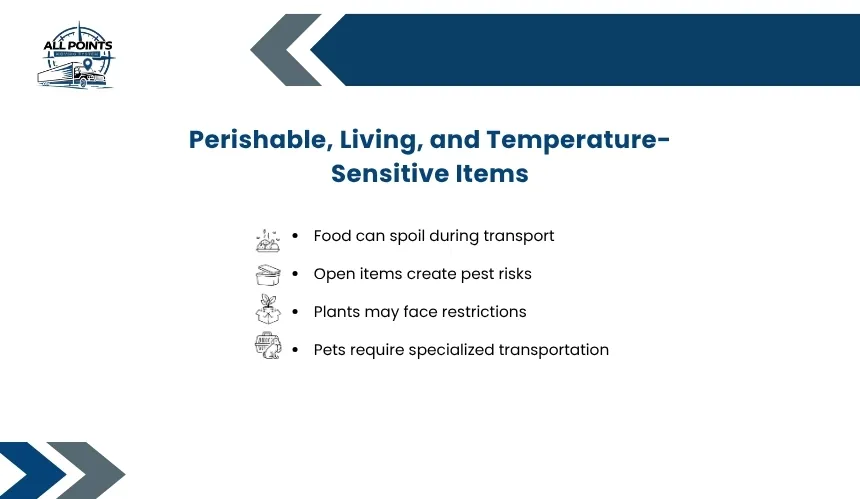
Items that depend on refrigeration, controlled temperatures, or ongoing care are generally excluded from standard moving services. Unlike hazardous materials, these belongings are refused because they can spoil, leak, attract pests, or deteriorate during transit, especially when delivery schedules or storage periods change unexpectedly.
Can Movers Transport Refrigerated or Frozen Food?
Most professional movers will not transport refrigerated or frozen food because they cannot maintain a consistent cold chain inside a moving truck. Meat, dairy products, frozen meals, seafood, and similar perishables can spoil if exposed to fluctuating temperatures, creating odors and contaminating nearby belongings.
Even short-distance moves can become longer than expected due to traffic, weather, or scheduling delays. Once perishable food leaves a temperature-controlled environment, its quality and safety can no longer be guaranteed.
Open or Unsealed Food
Opened pantry items are another category many movers ask customers to remove before moving day. Unsealed bags of flour, rice, cereal, pet food, spices, and baking ingredients can spill during loading or shifting in transit. Glass jars containing sauces, oils, or preserved foods may also break if improperly packed.
Beyond the risk of damage, exposed food products can attract insects or rodents if shipments are temporarily stored in warehouses before final delivery.
Plants and Garden Materials
Houseplants are accepted by some moving companies but refused by others, particularly for long-distance or interstate relocations. Live plants are vulnerable to heat, cold, poor ventilation, and extended travel times, all of which can affect their condition before they reach the destination.
Certain states also regulate the movement of plants, soil, firewood, and other organic materials to limit the spread of invasive insects, plant diseases, and agricultural pests. These restrictions may prevent movers from transporting specific vegetation across state lines, even when the plants appear healthy.
Pets and Other Live Animals
Professional moving companies do not transport live animals in moving trucks. Dogs, cats, birds, reptiles, fish, and other pets require ventilation, climate control, regular monitoring, and immediate access to food and water, conditions that standard moving vehicles are not designed to provide.
Pets are typically transported by their owners or through specialized pet transportation services. Keeping animals separate from household goods also reduces stress and eliminates safety risks associated with long periods inside cargo compartments.
3. Cash, Documents, and Irreplaceable Personal Belongings
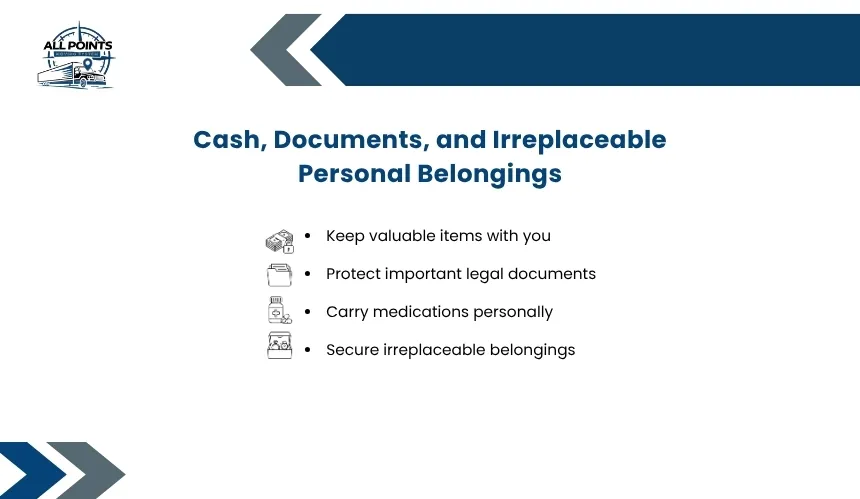
Professional movers generally advise customers to keep irreplaceable and high-value personal items with them instead of placing them on the moving truck. These belongings carry financial, legal, or personal significance that cannot be fully protected through standard transportation or easily replaced if they are delayed, misplaced, or damaged.
Why Should You Keep Money and Financial Assets With You?
Cash and negotiable financial assets should always travel with the owner. Items such as currency, personal checks, credit cards, stock certificates, savings bonds, and precious metals are difficult to document, recover, or value if they disappear during a move.
Most moving companies also limit or exclude liability for these possessions under their valuation coverage. Keeping them in a personal bag or locked container ensures they remain accessible throughout the relocation.
Jewelry and High-Value Collectibles
Small valuables are particularly vulnerable because they can be misplaced during packing or become difficult to locate after unpacking. Professional movers commonly recommend transporting items such as:
- Jewelry
- Luxury watches
- Rare coins
- Collectible stamps
- Family heirlooms
- Small antiques
- High-value trading cards
These possessions often have sentimental or market value that exceeds what standard moving protection is designed to cover. If professional packing is used, customers should discuss any exceptionally valuable items with the moving company before moving day.
Legal, Financial, and Identity Documents
Important documents should never be packed into boxes that travel on the moving truck. Passports, birth certificates, Social Security cards, wills, property deeds, insurance policies, tax records, medical records, and immigration documents may be needed before, during, or immediately after the move.
Separating these records also prevents delays if the shipment arrives later than expected or is temporarily held in storage.
Medications and Immediate Essentials
Prescription medications and other daily necessities should remain with the customer throughout the move. Delayed access to medication can interrupt treatment schedules or create medical concerns that cannot wait until household goods are delivered.
Along with medications, it is advisable to carry personal electronics, chargers, keys, eyeglasses, hearing aids, travel documents, and a change of clothing. Keeping these essentials readily available allows daily routines to continue even if unexpected transportation delays occur.
4. Firearms, Weapons, and Regulated Goods
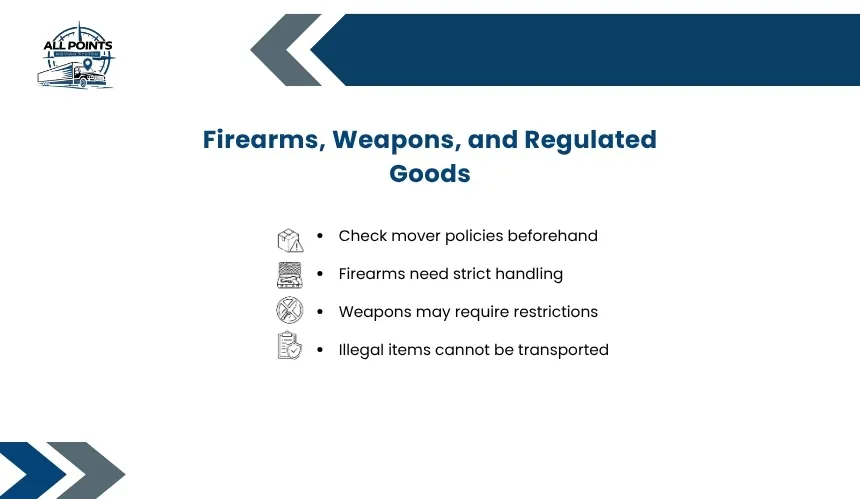
Professional movers must comply with company policies, carrier requirements, and applicable federal, state, and local laws. As a result, weapons and other regulated goods are often prohibited outright or accepted only under strict conditions. Customers should always verify a mover’s policy before packing these items.
Can Professional Movers Transport Firearms and Ammunition?
Firearms and ammunition are usually treated differently because they present separate safety and legal considerations. Ammunition is commonly prohibited due to its explosive potential and transportation restrictions.
Firearms may be accepted by some movers, but only if they meet specific company requirements. These often include unloading the firearm, securing it in an appropriate case, declaring it before the move, and complying with all applicable laws. Many companies choose not to transport firearms at all, making advance confirmation essential.
Other Weapons
Items designed to cause bodily harm may also be restricted, even if they are legally owned. Depending on company policy, movers may refuse or require special handling for:
- Swords
- Crossbows
- Air guns
- Tasers
- Large hunting knives
- Archery equipment
Restrictions vary because the potential for injury during loading and unloading differs by item, packaging method, and transportation route.
Illegal or Unlicensed Items
Professional moving companies will not transport property that is illegal to possess or move. This includes illegal drugs, stolen property, counterfeit goods, and prohibited weapons.
Some items may also become restricted when crossing state lines if they require permits, registration, or licensing that has not been obtained. Customers remain responsible for ensuring their belongings comply with applicable laws before the move begins. Verifying these requirements in advance helps prevent shipment delays, confiscation, or legal complications during transportation.
5. Contaminated, Unsafe, or Improperly Prepared Items
A moving company may also refuse items that are not inherently prohibited but have been damaged, contaminated, or inadequately prepared for transport. In these cases, the condition of the item, rather than the item itself, creates an unacceptable safety or property damage risk.
Pest-Infested or Biohazardous Belongings
Furniture, mattresses, rugs, or boxed belongings showing signs of bed bugs, rodents, mold growth, or other contamination are commonly rejected. These items can spread infestations or introduce health hazards to the moving truck and other customers’ shipments.
Biohazardous materials present an even greater concern. Belongings contaminated by sewage backups, bodily fluids, medical waste, or hazardous mold typically require professional remediation before they can be handled safely. Moving crews are not equipped to transport items that pose biological or environmental risks.
Leaking, Broken, or Structurally Unsafe Items
Movers may refuse belongings that cannot be lifted or secured safely due to their condition. Examples include leaking appliances, broken furniture with exposed fasteners, cracked aquariums, unstable shelving units, or exercise equipment with damaged structural components.
These defects increase the likelihood of injury during loading and unloading while also creating the potential for damage to nearby furniture, flooring, and packed boxes. Repairing or replacing damaged items before moving day often eliminates these issues.
Unemptied Equipment and Appliances
Many household appliances require preparation before they can be loaded onto a moving truck. Refrigerators and freezers should be emptied, defrosted, and dried to prevent water damage and mold. Washing machines, dishwashers, and similar appliances should be drained to eliminate leaks during transport.
Outdoor equipment also requires attention. Lawn mowers, pressure washers, generators, and propane grills are frequently refused if they still contain fuel, oil, or attached fuel cylinders. Preparing these items according to the mover’s guidelines reduces the risk of delays during pickup.
Items That Cannot Be Moved Safely or Legally
Some belongings are declined because they cannot be transported with standard moving equipment or within legal transportation limits. Oversized safes, industrial machinery, extremely heavy stone features, or custom-built furniture may require specialized rigging, lifting equipment, or dedicated transportation services.
Access conditions can also affect whether an item can be moved. If a large object cannot fit through doorways, stairwells, elevators, or narrow hallways without creating a significant risk of structural damage or worker injury, the moving company may postpone or refuse the move until appropriate equipment or alternative access methods are arranged.
Planning a move in Central Florida? Let All Points Moving System handle the heavy lifting with dependable residential and commercial moving services. Our experienced team helps make every move safer, more organized, and less stressful from pickup to delivery. Contact us today to schedule your next move with confidence.
Frequently Asked Questions
The crew may stop loading, remove the box from the shipment, or require the customer to unpack it immediately. Undeclared hazardous materials can also affect liability coverage or trigger additional charges. The safest approach is to disclose uncertain items before moving day and obtain written guidance from the moving company.
Movers generally do not open and inspect every sealed carton, but they may ask about labels, unusual odors, leaking containers, or improperly packed items. Customers remain responsible for the contents of their boxes. A signed inventory or bill of lading may also require confirmation that prohibited materials are not included.
A mover may delay or suspend loading until the restricted item is removed, especially when it creates a fire, contamination, or legal risk. The entire move is less likely to be canceled when the issue can be corrected quickly, but repeated nondisclosure may allow the carrier to terminate service under the contract.
Specialty carriers may handle possessions such as large safes, pianos, laboratory equipment, fine art, or industrial machinery using dedicated vehicles and rigging systems. However, illegal goods and many hazardous substances remain prohibited. Customers should verify licensing, insurance, equipment limits, and handling requirements before hiring a specialty moving service.
Interstate relocations usually involve stricter carrier policies because shipments cross jurisdictional boundaries and may remain in transit or storage longer. Local movers may have slightly different restrictions, but safety and insurance rules still apply. Company policy can be more restrictive than state or federal transportation requirements, so direct confirmation remains necessary.
Request the list before packing begins, ideally when comparing estimates or reviewing the moving contract. Early confirmation gives you time to use, donate, dispose of, or transport excluded belongings separately. Waiting until loading day can create delays, disposal problems, and unexpected changes to the pickup schedule.
Valuation protection may exclude or limit compensation for jewelry, collectibles, financial documents, and other high-value articles that were not listed in advance. Many movers require a written declaration for items above a specified value. Review the carrier’s liability terms and consider separate insurance for possessions that exceed standard coverage limits.